NGT Clears Great Nicobar Mega Infrastructure Project Citing Strategic Importance
Chennai:
Port Wings News Network:
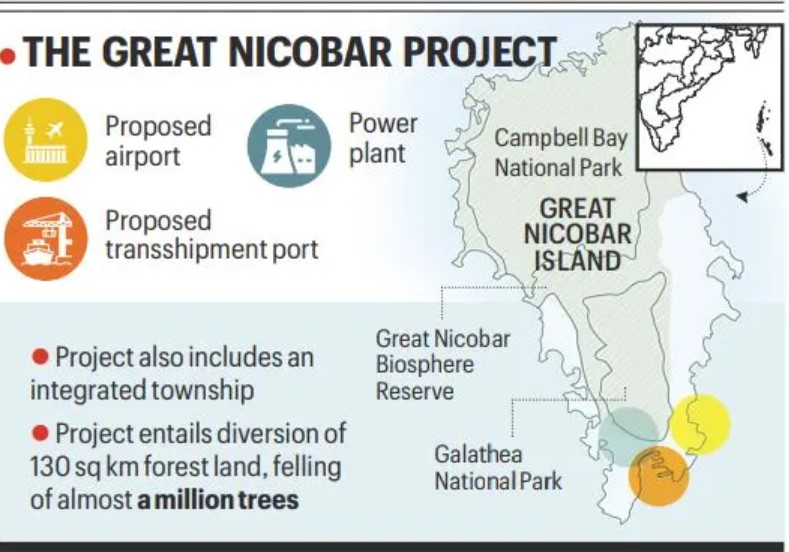 A six-member National Green Tribunal (NGT) special bench ruled on 16 February that it did not find “any good ground” to interfere in the environmental clearance accorded to the Rs 81,000-crore Great Nicobar mega infrastructure project as there were “adequate safeguards” in the project’s environmental clearance, says a news report on leading daily The Indian Express.
The bench, headed by NGT chairperson Justice Prakash Shrivastava, also noted the “strategic importance of the project” and the issues that were dealt with by a high-powered committee (HPC) tasked with revisiting the project’s environmental clearance, as per a 2023 order of the NGT.
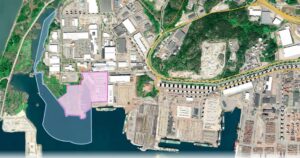
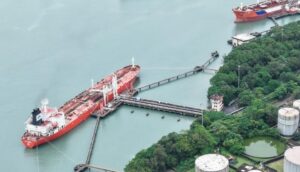
The mega project, spread over 166 sq km, entails diversion of 130 sq km of forest land and felling of almost a million trees to facilitate the construction of a transshipment port, an integrated township, a civil and military airport and a 450-MVA gas and solar power-based plant. The Centre has pushed ahead with the project amid concerns expressed by the Nicobarese community over dispossession of their ancestral land (which was devastated in the 2004 tsunami), as well as concerns over ecological damage.
The special bench headed by Shrivastava is composed of judicial members Justice Dinesh Kumar Singh, Justice Arun Kumar Tyagi, and expert members A Senthil Vel, Afroz Ahmand and Ishwar Singh. The tribunal acknowledged that neither the project’s strategic importance could be denied, nor conditions of the Island Coastal Regulation Zone (ICRZ) notification be ignored. It framed the issue as one that needed a “balanced approach.”
With this order, the NGT disposed off a batch of petitions which had alleged violations of the ICRZ notification, 2019, for clearing projects in ecologically sensitive coastal areas, and also allegations of non-compliance of the NGT’s 2023 order on revisiting the EC. Environmental activist Ashish Kothari had filed the petitions before the NGT and argued that parts of the proposed project (700 hectares) fell in ICRZ areas, where development was prohibited.
This National Green Tribunal order is significant and is likely to act as a reference point for future projects of strategic importance that are planned in ecologically sensitive areas — ‘balanced approach’ being the key words.
In its order, the NGT sought to address three key concerns – protection of corals; whether limited baseline data was relied upon to clear the project; whether parts of the project fell in prohibited and protected coastal areas. It also assessed whether or not conditions imposed in the project’s 2022 environmental clearance – to mitigate its impacts – were met.
On the issue of whether the project fell within ICRZ areas, the NGT relied upon the report of the high-powered committee headed by former environment secretary Leena Nandan, and concluded that no part of it fell in the prohibited area. The committee was formed in compliance with the NGT’s April 2023 order, to revisit some unanswered issues in the project’s environmental clearance. During the course of the pleadings, the Environment Ministry did not make the HPC report public, citing confidentiality and strategic interests. The Tribunal eventually relied only on the HPC’s findings produced in an affidavit by Centre.
It also recorded the Centre’s submissions that parts of ports which fall in the CRZ (1A and 1B areas) as per the proposed master plan, shall be excluded from the revised master plan.
The NGT said in its order that it found “adequate safeguards” within the environmental clearance and did not find any good ground to interfere in the project’s clearance. The green court recorded that there were specific conditions laid down for protection of the leatherback sea turtle, the Nicobar megapode, saltwater crocodiles, robber crab, Nicobar macaque and other endemic bird species of the Great Nicobar island.
The tribunal stipulated that the government is bound by the conditions in the environmental clearance and must ensure these are not violated.
The NGT directed the Union Environment Ministry to ensure that the project’s proposed constructions – including foreshore development – should not cause erosion, shoreline changes near the project area and all along the islands. “The shoreline of the island will be protected ensuring no loss of sandy beaches as these beaches provide nesting sites for turtles, birds, apart from protecting the islands,” it said.
The tribunal took into account past submissions made by the Zoological Survey of India, and concluded that no coral reef exists within the project area and existing scattered coral reef will be translocated as per suggestions of the Zoological Survey of India. It directed the ministry to take all measures to protect coral reefs along the coastal stretch and ensure coral regeneration through proven scientific methods.
About The Author