Suspension of Licence of a CFS at JNPA Roils Trade
Mumbai:
Port Wings News Network:
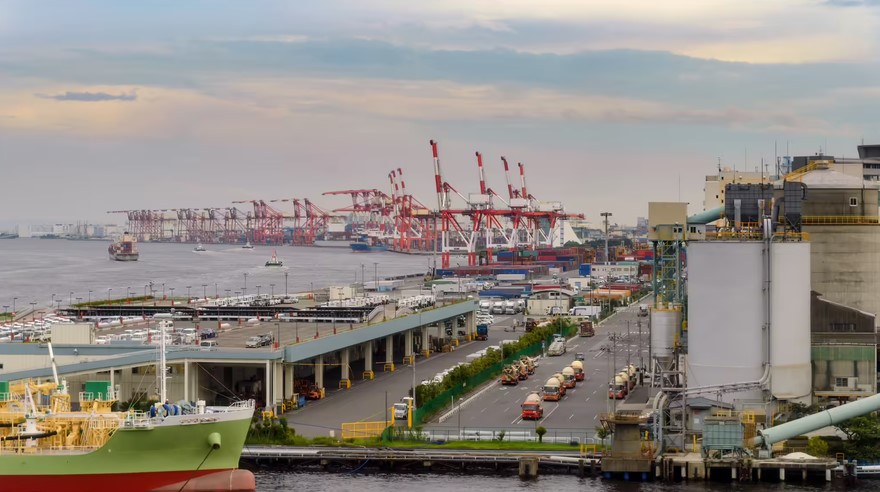 The ongoing suspension of one of India’s largest Container Freight Stations (CFS) has triggered a wider debate within the logistics industry about regulatory proportionality, trade facilitation and the economic consequences of prolonged administrative action, according to a news report published on ET Infra.
The suspension was ordered under Regulation 11(2) of the Handling of Cargo in Customs Areas Regulations, 2009.
This provision confers an extraordinary power upon Customs authorities to take immediate action in exceptional circumstances where urgent intervention is considered necessary in the public interest. Given the serious consequences that follow such action, the exercise of this power is generally expected to be based upon compelling circumstances and accompanied by timely completion of the prescribed adjudicatory process.
Customs authorities suspended the licence of International Cargo Terminal Pvt Ltd after the Directorate of Revenue Intelligence (DRI) found that two imported containers at the CFS were stuffed with fireworks/firecrackers/ originating from China, a restricted item, though the importers had declared the cargo as Gypsum Plaster and CMS Granules.
DRI also alleged that a smuggling syndicate made an unauthorised attempt to remove cargo from a third container from the ICTPL CFS, which was declared as household goods but was carrying fireworks/firecrackers.
More than 80 days after the suspension, the matter continues to remain unresolved, raising concerns among importers, exporters, shipping lines, freight forwarders, transporters and other stakeholders who depend on the smooth functioning of logistics infrastructure at JNPA, India’s busiest container gateway.
“The issue is no longer confined to a dispute involving a single operator. It has evolved into a larger question concerning the balance between enforcement objectives and the uninterrupted functioning of critical trade infrastructure,” said a trade source.
The suspended facility handled nearly 15,000 twenty-foot equivalent units (TEUs) a month and formed an important component of the logistics ecosystem serving Jawaharlal Nehru Port. Its closure has removed substantial operational capacity from an already stressed system.
“As cargo is diverted to alternate facilities, the resulting congestion has reportedly led to longer dwell times, increased transportation costs, operational delays and additional burdens on importers and exporters,” the trade source said.
Businesses that had integrated the facility into their supply chain planning have been compelled to alter logistics arrangements, secure alternative warehousing, reorganise transportation schedules and absorb significant additional costs.
For businesses operating in competitive international markets, such disruptions directly affect efficiency, customer commitments and competitiveness.
Impact on livelihood
The economic consequences of the suspension extend far beyond cargo movement. More than 800 individuals depend directly and indirectly on the facility for their livelihood. Employees, contract workers, equipment operators, transporters, drivers, security personnel, housekeeping staff and numerous service providers continue to face uncertainty. In the absence of any final determination of liability, many industry observers question whether innocent stakeholders should be required to bear such prolonged economic hardship.
The facility is also widely recognised as India’s first Green Container Freight Station and has invested heavily in modern infrastructure, safety systems, security protocols, compliance mechanisms and sustainability initiatives. Industry participants therefore find it difficult to understand why a facility with extensive compliance credentials continues to remain non-operational for such an extended period.
“No one disputes the importance of strict enforcement. Effective enforcement is essential for protecting national interests, preventing misuse of the supply chain and maintaining the integrity of Customs administration. However, enforcement must also be accompanied by fairness, consistency and proportionality. Regulatory action should not unnecessarily disrupt legitimate trade or impose avoidable hardship upon stakeholders who are unconnected with the alleged violations,” said a second trade source.
Several industry stakeholders have expressed concern that the practical effect of the suspension now appears increasingly punitive despite the fact that the statutory inquiry process is still ongoing. The purpose of suspension is traditionally understood to be preventive and temporary. The longer such suspension continues, the more difficult it becomes to distinguish between a temporary regulatory measure and a de facto punishment imposed before final adjudication.
The continuing legal proceedings have further added to the uncertainty. The matter has moved through multiple forums including Customs authorities, Customs, Excise & Service Tax Appellate Tribunal (CESTAT) and the Bombay High Court and is now once again awaiting consideration before CESTAT.
While every party has a legal right to pursue available remedies, the resulting procedural cycle has meant that a major logistics asset remains idle while trade, employees and businesses continue to bear the consequences.
Industry observers also point out that over the years there have been several cases involving serious allegations within the logistics and Customs ecosystem. Yet many struggle to identify comparable instances where a major logistics facility has remained effectively shut for such a prolonged period before completion of the adjudicatory process. This has led to growing questions regarding consistency, predictability and uniform application of regulatory powers.
Another issue frequently raised by stakeholders concerns the status of the individuals allegedly involved in the underlying incident. The persons accused have already been arrested and granted bail in accordance with law. Against that backdrop, many within the trade community continue to ask what public interest objective is now served by keeping a critical logistics facility non-operational for an indefinite period.
“The larger question is one of national interest. At a time when India is actively pursuing policies aimed at reducing logistics costs, improving Ease of Doing Business rankings, attracting investment and positioning itself as a global manufacturing and supply chain hub, prolonged disruption of critical logistics infrastructure inevitably raises concerns regarding economic efficiency and investor confidence,” the second trade source said.
This case therefore goes far beyond one Container Freight Station. It raises fundamental questions about how India balances enforcement with economic growth, trade facilitation, employment protection and regulatory certainty.
“Businesses can accept strict enforcement where required. What they seek is confidence that such powers will be exercised fairly, proportionately and consistently, with due regard for the wider economic consequences,” the second trade source said.
As the matter awaits further consideration before the CESTAT, the trade community remains hopeful that the issues raised will receive objective consideration in accordance with the principles of natural justice, proportionality and the rule of law.
The outcome will be watched closely not only by those directly involved but by the wider logistics industry, investors and businesses that depend upon confidence in India’s regulatory and commercial framework.
About The Author