A Ride Through the Inland Waterways of India
New Delhi:
Port Wings News Network:
 India has a network of 111 National Waterways, with a total length of 20,187 km spread across 23 States and four Union Territories. Of these, 32 National Waterways are currently operational.
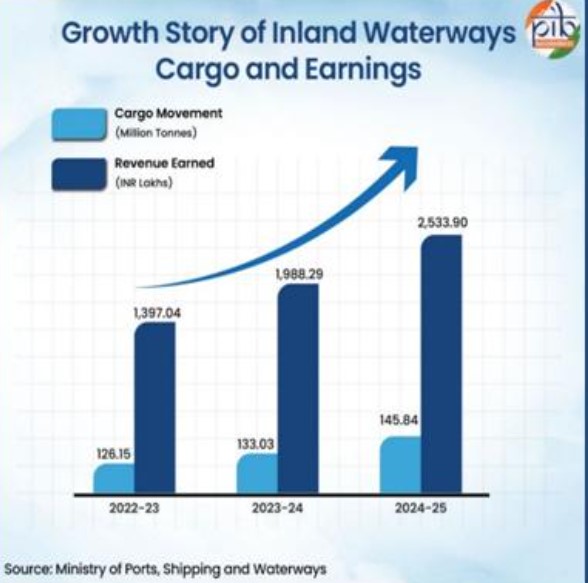
The Union Budget 2026-27 has announced to operationalise 20 new National Waterways (NWs) over the next 5 years. Cargo transportation on National Waterways reached an all-time high of 145.84 million metric tonnes in FY 2024-25.
Introduction
India possesses an extensive network of inland waterways in the form of rivers, canals, backwaters, and creeks. These routes offer a cost-effective and environmentally sustainable way to move freight, as they use fuel efficiently and produce fewer emissions. They require minimal land, safely carry bulk/over-dimensional cargo, and maintain high safety standards across operations.
In India, Inland waterways also help reduce pressure on busy roads and railways, and support services such as vehicle transport through Roll-on/Roll-off (Ro-Ro) ferries and tourism activities. The sector supports substantial employment, involves lower maintenance costs, and is essential for many major industries and consumers who depend on a reliable and well-functioning waterway network.
Recognising this potential, the Union Budget 2026-27 announces the operationalisation of 20 new National Waterways over the next five years and introduces a Coastal Cargo Promotion Scheme that seeks to shift cargo from road and rail to water transport. This policy push is intended to increase the combined share of inland waterways and coastal shipping from 6 per cent to 12 per cent by 2047. As part of this momentum, the government will operationalise National Waterway-5 in Odisha to connect the mineral-rich regions of Talcher and Angul with industrial centres such as Kalinga Nagar and with the ports of Paradip and Dhamra. Training institutes will be established as Regional Centres of Excellence along the NW-5 stretch to develop skilled manpower and benefit local youth. In addition, a dedicated ship repair ecosystem for inland waterways will be set up in Varanasi and Patna.
An Understanding of Inland Waterways
Inland waterways are navigable water channels within a country that are not part of the sea. These include rivers, canals, lakes, lagoons, and certain river estuaries. They are suitable for navigation due to natural or man-made features and allow vessels carrying at least 50 tonnes under normal operating conditions. Rivers or lakes are considered navigable when vessels can use them for commercial trade. They may be naturally suitable or improved through canals.
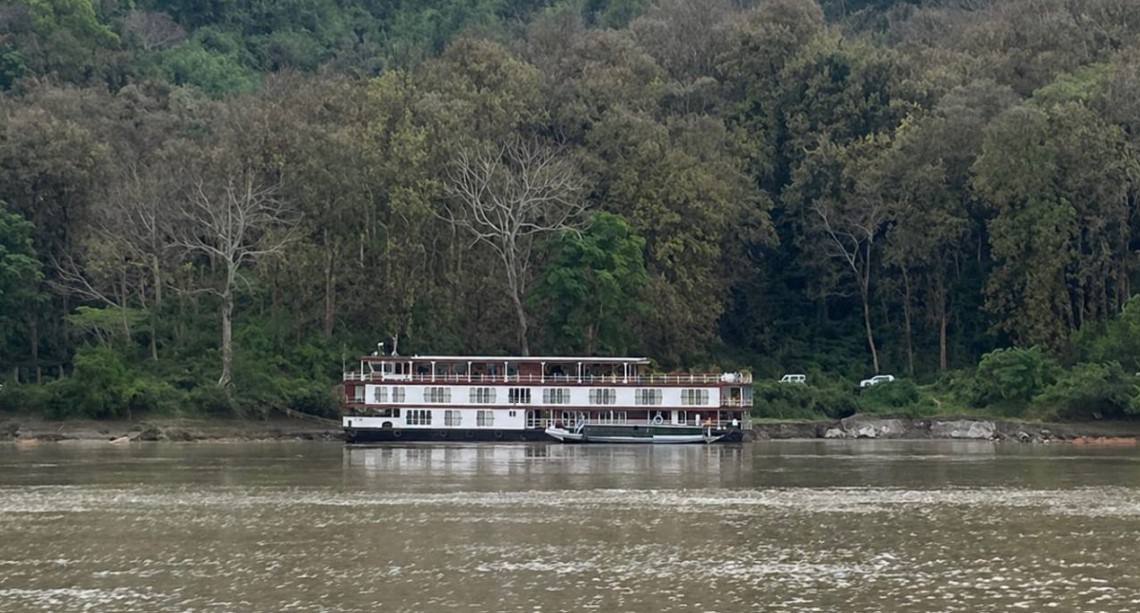 Waterways of a maritime nature and those mainly used by seagoing ships may also be counted in. The length of rivers and canals is measured along the mid-channel, while the length of lakes and lagoons is measured along the shortest navigable route used for transport. River estuaries are considered inland waterways up to the point nearest to the sea where the river width is less than 3 km at low water and less than 5 km at high water.
They support commercial transport that ranges from natural river routes to completely engineered channels, and are commonly classified into three main types:
Open River Waterways are natural rivers where vessels operate in a largely free-flowing channel, with limited improvements made to maintain sufficient depth for movement.
Canalised Waterways are rivers that have been modified using structures such as locks and dams, which divide the river into calmer sections and provide more reliable water levels for transport.
Canals are man-made waterways built specifically to carry vessels, often to avoid natural barriers or to connect different rivers and lakes, offering fully controlled conditions for inland water transport.
If an inland waterway forms a boundary between two countries, it is recognised as belonging to both.
Transportation through Inland Waterways
 The International Labour Organization (ILO) emphasises that transport through inland waterways is more sustainable, with energy use about 3-6 times lower than road transport and up to 2 times lower than rail. It also produces less noise and fewer emissions. A standard inland vessel with a carrying capacity of about 2,000 tonnes can replace nearly 125 trucks of 16-tonne capacity each, highlighting its efficiency in bulk cargo movement.
From an economic view, inland water transport (IWT) is also lucrative because it uses natural routes and needs less infrastructure. Its operating costs are lower than land transport, and it mainly competes with road and rail. It usually carries a small share of passengers, even in regions where it is common, but it plays a much bigger role in moving freight.
Furthermore, the World Bank states that inland waterways require some essential facilities for smooth operation. These include ports, terminals, connecting roads or rail links, navigation aids and regular dredging to keep enough depth. Other transport options often face traffic and limited space. Inland waterways offer a more dependable option with more predictable travel and have much more room to grow because many routes are still unused.
Cargo Movement and Revenue Outcomes on National Waterways
Waterways can carry up to four times more cargo using the same amount of fuel, making them a cost-effective option for trade. They also use less energy, create less noise, and produce lower carbon emissions, making water transport a cleaner and more dependable way to move goods. According to the Economic Survey 2025-26, as of November 2025, cargo operations are functional on 29 National Waterways, cruise operations on 15 National Waterways, and passenger services on 23 National Waterways.
A total of 11 National Waterways support all three modes of transport, namely cargo, cruise, and passenger movement, signifying strong multimodal integration. Passenger traffic has also grown significantly, increasing from 1.61 crore in 2023-24 to 7.6 crore in 2024-25. Cargo transportation on NWs reached 145.84 million metric tonnes in the financial year 2024-25, and 198 MMT (till February 2026) in the financial year 2025-26.
The combined cargo handling capacity of major ports rose from 555 million metric tonnes per annum (MTPA) in FY 2013-14 to 1,681 MTPA in FY 2024-25. Moreover, the turnaround time for container vessels declined substantially from 41.76 hours in 2013-14 to 28.5 hours in 2024-25. The steady growth shows that inland waterways are becoming an increasingly important, efficient, and environmentally friendly way to move goods across India.
Initiatives for Upgrading Inland Water Transport Infrastructure in the North-Eastern States
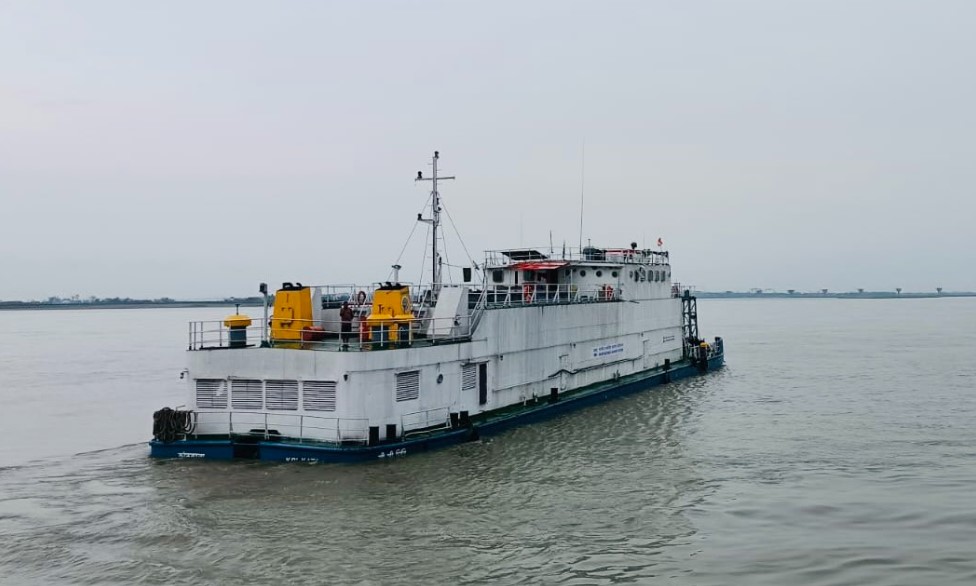 The Economic Survey 2025-26 highlights steady progress in Inland Water Transport (IWT) development across the North-Eastern region. It notes that IWT projects are advancing on National Waterway-2 (NW-2) and National Waterway-16 (NW-16). Additionally, Detailed Project Reports (DPRs) for projects in Nagaland and Mizoram are approaching finalisation.
The Survey further records that Tripura is implementing a ₹24.53 crore project to establish connectivity between the Gumti River in India and the Meghna River in Bangladesh. Alongside these developments, several other government initiatives are contributing to the continued expansion and strengthening of Inland Water Transport infrastructure in the North-Eastern States.
The Way Forward
India’s inland waterways journey signifies an evident shift in how the country views its rivers, not merely as natural assets but as active instruments of growth, sustainability, and inclusion.
Through enabling laws such as the Inland Waterways Authority of India Act, 1985 and the National Waterways Act, 2016, a strong institutional foundation has been established for a nationwide waterway network. This framework is being translated into action through focused programmes such as the Jalvahak Cargo Promotion Scheme, the Jal Marg Vikas Project (JMVP), and Arth Ganga (JMVP II), which are strengthening freight movement while reconnecting riverine communities with markets and livelihoods.
Alongside physical infrastructure, the Government has advanced digital governance through initiatives such as CAR-D, PANI, JALYAN and NAVIC, LADIS, River Information Services (RIS), and the Jal Samriddhi Portal, improving safety, transparency, real-time decision-making, and ease of doing business across National Waterways.
Targeted investments in the North-Eastern States underline a commitment to balanced regional development, while the Harit Nauka Inland Vessels Green Transition Guidelines place environmental responsibility at the centre of inland transport growth. In parallel, the River Cruise Tourism Roadmap 2047 unlocks the cultural, heritage, and tourism potential of India’s rivers.
Within this expanding development landscape, the Union Budget 2026-27 proposes to bring new National Waterways into operation, establishing Training Institutes as Regional Centres of Excellence to cultivate specialised skills, creating a ship repair ecosystem, and launching a Coastal Cargo Promotion Scheme that seeks to increase the combined share of inland waterways and coastal shipping. Flowing through policy, infrastructure, technology, and sustainability, these initiatives collectively shape a future where India’s inland waterways emerge as prevailing passageways of economic vitality, ecological balance, and shared national progress.
About The Author