West Asia Situation Forces Indian Govt To Hold High-Level Meetings to Address Shipping Challenges
New Delhi:
Port Wings News Network:
 The Government of India has continued its proactive and coordinated response to the evolving situation in West Asia by convening high-level stakeholder consultations to address emerging logistics, packaging and shipping-related challenges impacting India’s trade and export ecosystem.
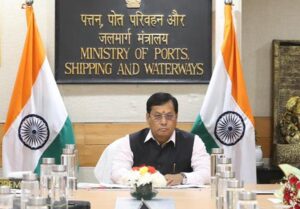
In this regard, two important meetings were held on 10 April 2026, one under the chairpersonship of the Commerce Secretary and another co-chaired by the Secretary, Ministry of Ports, Shipping and Waterways (MoPSW) and the Commerce Secretary, bringing together senior officials, port authorities, shipping agencies, Export Promotion Councils (EPCs), industry representatives and other stakeholders.
The meeting chaired by the Commerce Secretary focused on challenges arising from disruptions in packaging materials and associated inputs. It was observed that the ongoing geopolitical developments can impact the availability and pricing of key petrochemical inputs such as polymers and resins, leading to increased costs for packaging materials across sectors. Industry participants highlighted the increase in prices of critical inputs, placing particular stress on MSMEs.
Sectoral inputs highlighted that stress in supply chains, logistics constraints and rising input costs can impact industries such as apparel, leather, telecom/optical fibre and medical devices. Stakeholders while complimenting the ongoing efforts of Government of India flagged need for support in terms of continued availability of critical inputs such as LNG, helium and petrochemical derivatives, along with early GST refunds to improve liquidity.
Recognising the cross-sectoral nature of the challenge, the Commerce Secretary emphasised the ongoing endeavour of Government need to ensure uninterrupted availability of critical raw materials and maintain production continuity. He emphasised the need for undertaking time-bound assessments of key packaging inputs, including mapping domestic production capacity and identifying import dependencies. He mentioned that a structured monitoring mechanism for tracking export-import trends and sectoral stress indicators on a weekly basis will also be instituted. Regular consultations with industry and Export Promotion Councils will continue to identify emerging challenges and facilitate timely interventions.
The second meeting, co-chaired by the Secretary, MoPSW and the Secretary, Department of Commerce, provided a constructive platform to address logistics and shipping-related issues raised by stakeholders. The meeting was also attended by the Chairman, Central Board of Indirect Taxes and Customs (CBIC) and other Customs officials, ensuring comprehensive and coordinated discussions.
Secretary Shipping covered various issues, including documentation processes, back-to-town and transit cargo matters, benefits by shipping lines, air freight costs, railway concessions, and bunker fuel availability, reflecting a proactive approach to resolving operational challenges.
Stakeholders were apprised of the current operational position regarding vessel availability, cargo handling, and transshipment, with smooth cargo movement reported and no major constraints observed, indicating system resilience.
The Chairman, CBIC, informed about various measures taken to streamline the clearance of cargo at the ports.
Issues relating to hazardous cargo were discussed positively, with Customs agreeing to examine specific cases relating to destuffing to further streamline procedures.
It was further informed by various stakeholders that issues related to non-passing of benefits by shipping lines have been actively addressed.
To proactively resolve any future issues, exporters were encouraged to report case-specific issues for prompt and effective resolution.
Following the meeting, the Ministry of Ports, Shipping and Waterways has directed all ports and terminal operators to take immediate action to enhance transparency and operational efficiency. These measures include publication of concessions and waivers provided to cargo and vessels, review of bunker fuel availability, and expedited evacuation of stranded containers, reinforcing efficiency across the system.
The Government remains closely engaged with all stakeholders to continuously monitor developments and ensure swift and effective resolution of operational challenges. This coordinated approach across Ministries is making India’s trade ecosystem resilient, minimising disruptions, and actively supporting trade and Industry during this evolving situation.
The Department of Commerce, Ministry of Ports, Shipping and Waterways and Central Board of Indirect Taxes and Customs (CBIC) will continue to take all necessary measures, in consultation with relevant Ministries and industry stakeholders, to ensure smooth logistics operations and safeguard national trade interests.
About The Author