Paradip Port Registers Historic Cargo Handling in FY 2025-26, Joins Elite Club of Top Global Ports
Paradip:
Port Wings News Network:
 Paradip Port Authority (PPA) has once again emerged as the leading Major Port on the eastern coast of India, reinforcing its strategic significance in the region.
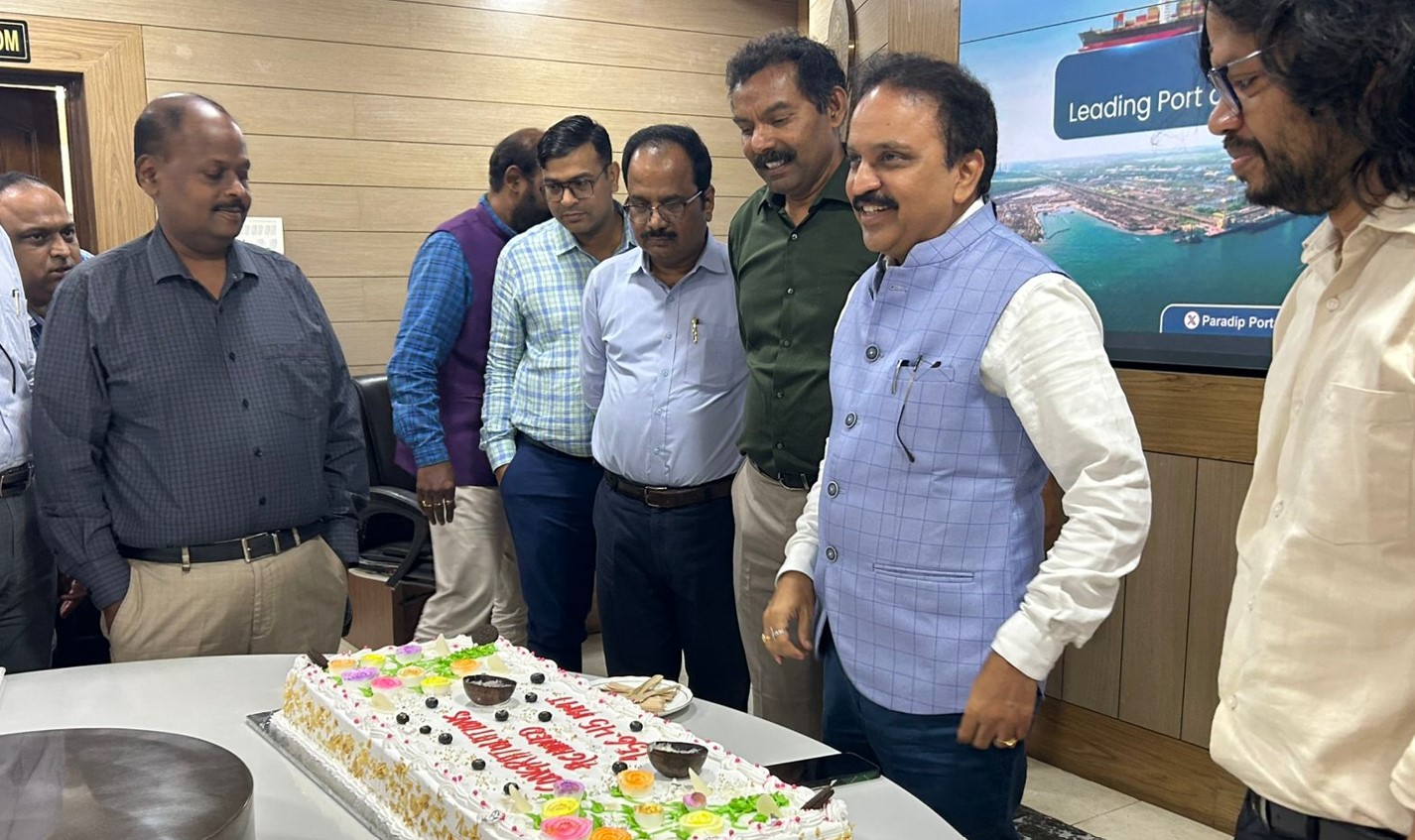
PPA achieved a significant milestone by joining the elite 155+ Million Metric Tonnes (MMT) Club, recording an impressive cargo throughput of 156.45 MMT during FY 2025–26, the best ever in its history, since it became operational in 1966 marking a growth of 4.01% over the previous financial year.
Despite challenging market conditions, including a decline in export demand for Iron ore and West Asia crisis, which impacted import of Limestone, Fertilisers raw materials, still Paradip Port maintained its dominant position. It continued to lead in cargo handling among all ports—both major and non-major—on the eastern coast of India.
P. L. Haranadh, Chairman, Paradip Port Authority, congratulated all stakeholders, including exporters, importers, employees, staff unions, PPP operators, stevedores, and shipping agents, for their collective efforts in achieving this milestone.
He expressed sincere gratitude to Sarbananda Sonowal, Union Minister of Ports, Shipping & Waterways, and Shantanu Thakur, Minister of State, for their guidance and leadership. He also acknowledged the support of the Ministry of Railways, Government of Odisha, and the Department of Customs in driving the Port’s continued success.
BEST PERFORMING BULK PORT
PPA maintains its position, as best performing bulk port by registering the highest berth productivity among all Indian Ports. The berth productivity stands at 35059 MT per day per berth against the national average of around 18,000 MT, almost double of national average.
LEADING PORT IN COASTAL SHIPPING AMONG INDIAN MAJOR PORTS
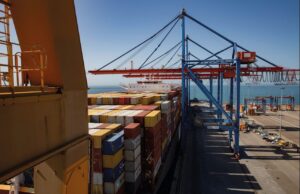
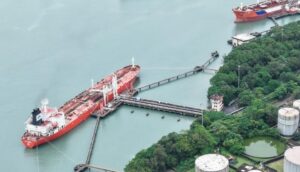
Strategic system improvements and enhanced operational efficiencies played a key role in driving this growth. Coastal cargo handling accounted for 42.06% of the total volume, reaching 65.81 MMT, establishing Paradip Port as the leading port in coastal shipping among Indian Major Ports. During the fiscal year, Petroleum, Oil and Lubricants (POL) handling grew by 25.68%, while steel cargo recorded a strong increase of 43%. Additionally, coal handling rose by 4.44%, container traffic registered a growth of 7.77%, and flux handling increased by 18.32%. LPG handling surged by 105%, reflecting a well-rounded performance across all major cargo segments.
The Port’s vast hinterland, rich in mineral resources such as iron ore, coal, and limestone, along with the presence of major steel plants and fertilizer industries, continues to drive cargo growth, including raw materials catering to fertilizer companies.
Among terminal operators, Kalinga International Coal Terminal Pvt. Ltd. recorded a 18.92% growth, while Paradip International Cargo Terminal Pvt. Ltd. achieved a 19.53% increase, both registering their highest-ever cargo volumes. PICT also contributed significantly to overall cargo handling performance.
Paradip Port has achieved its best-ever financial performance during the fiscal year 2025-26, setting new benchmarks in the history of Indian Major Ports.
UNPRECEDENTED GROWTH ACROSS ALL KEY FINANCIAL PARAMETERS
The port has reported unprecedented growth across all key financial parameters, showcasing robust financial strength. For the first time in its history, Paradip Port’s net surplus has crossed Rs. 2000 Cr. And Operating ratio has been 31%, which is the best till date.
This fiscal milestone follows a year of extraordinary operational efficiency and cargo handling.
Looking ahead, Paradip Port is focusing on expansion and sustainability. The 25 MMTPA Western Dock Project, being developed by M/s JPPL, is progressing rapidly and is expected to be completed by 2026. Plans are also underway to establish a Green Hydrogen/Ammonia Export Terminal, aligning with future energy goals. PPA has initiated steps in FY 25-26 to modernise all berths by obtaining appropriate approvals. It will emerge as the first fully mechanised bulk port of the country well before 2030.
About The Author