Paradip’s Mega Port Moment: From Cargo Gateway to Maritime Industrial Ecosystem
Paradip:
Port Wings News Network:
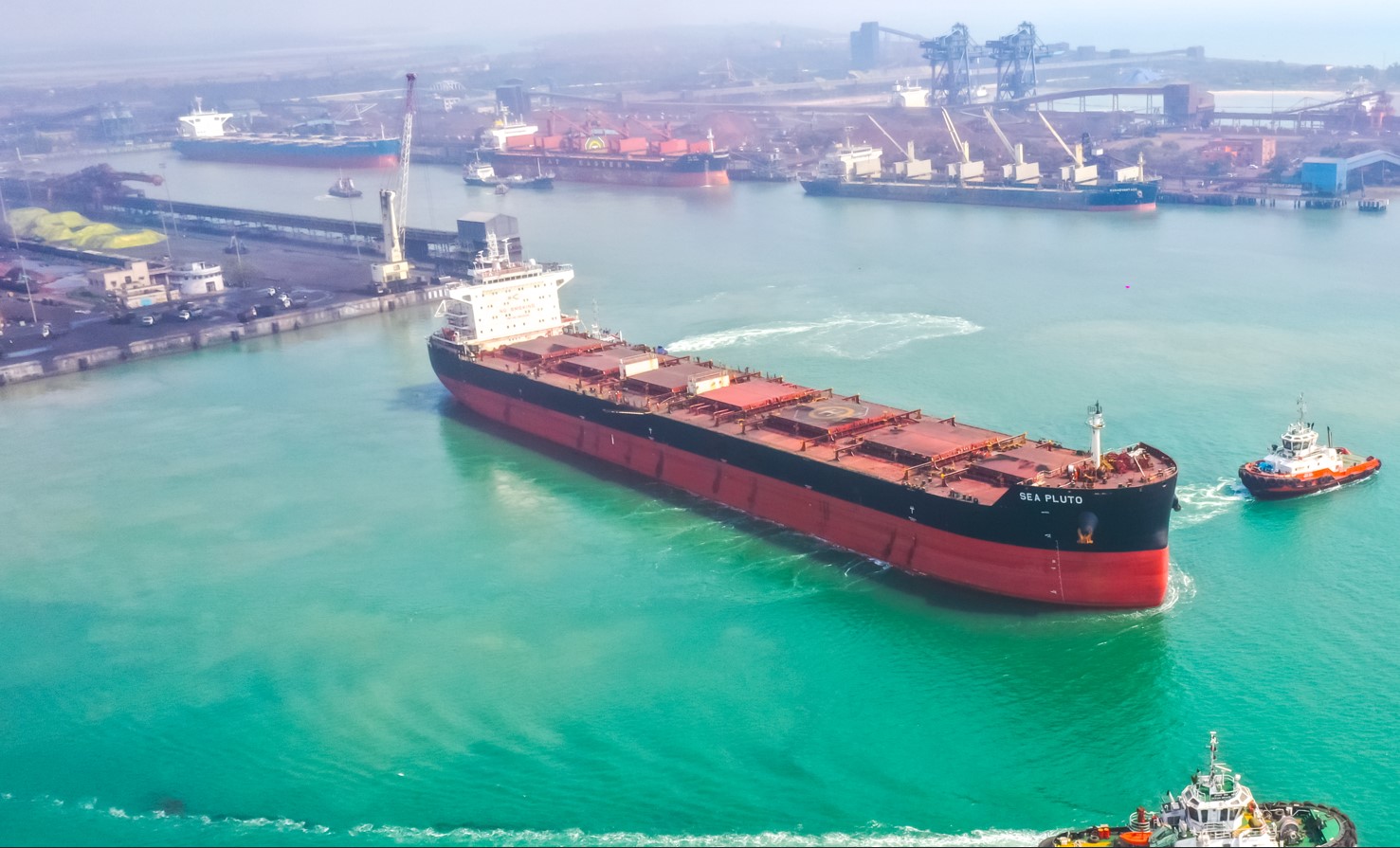 With record cargo volumes, deeper maritime capacity, cleaner energy infrastructure, shipbuilding ambitions and stronger logistics, Paradip is entering a fundamentally different phase of growth.
Paradip Port’s designation as a ‘Mega Port’ is more than recognition of cargo scale. At 156.45 million metric tonnes (MMT) of annual throughput in FY 2025–26, the port has crossed a threshold that reflects how its economic role is changing — from primarily moving cargo to becoming a broader platform for logistics, industry, clean energy, maritime manufacturing and regional investment.
The change is visible in the numbers. Paradip’s cargo throughput has risen from 76.39 MMT in FY 2015–16 to 156.45 MMT in FY 2025–26, more than doubling over the decade and reaching the highest annual cargo throughput recorded by the port since its inception. The port today has a rated capacity of around 289 MTPA and a long-term ambition to exceed 500 MTPA by 2047.
That scale is the foundation of the Mega Port recognition. But its larger significance lies in what comes next: deeper marine infrastructure, stronger hinterland connectivity, new industrial capacity, clean-energy facilities, shipbuilding and repair, and a progressively more digital and sustainable operating environment.
A Milestone in Paradip’s Development
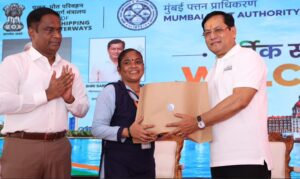
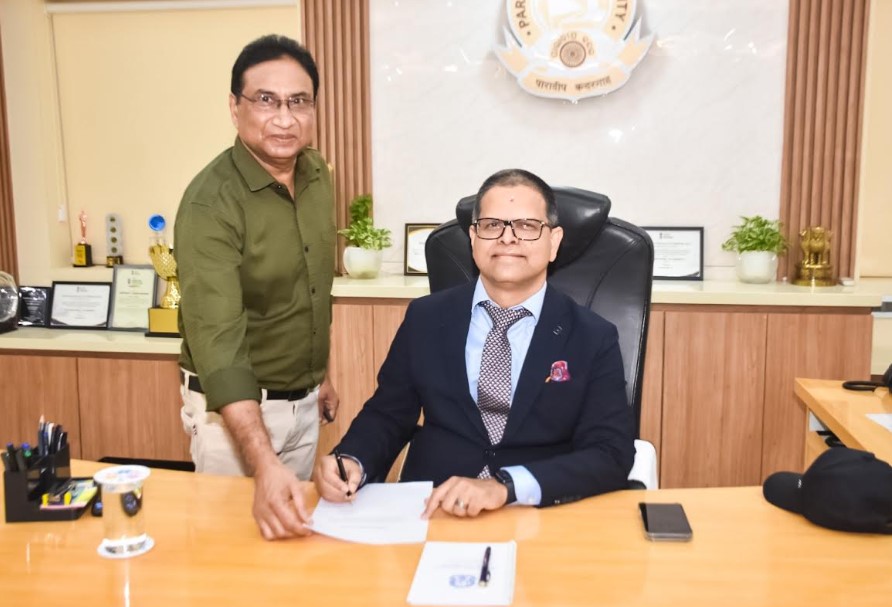 “The Mega Port designation recognises the scale Paradip has already achieved. We are grateful for the Hon’ble Prime Minister Shri Narendra Modi’s vision for India’s maritime growth and port-led development, and for the continued guidance and support of Shri Sarbananda Sonowal, Hon’ble Minister of Ports, Shipping and Waterways, and Shri Shantanu Thakur, Hon’ble Minister of State for Ports, Shipping and Waterways. Our next task is to convert this scale into wider economic value — through stronger logistics, deeper maritime infrastructure, clean energy, industrial development and new maritime capabilities around the port,” said Susanta Kumar Purohit, IRSEE, Chairperson, Paradip Port Authority
MEGA PORT AT A GLANCE
For bulk ports, the prescribed threshold is 150 MMT of cargo throughput in the preceding financial year; for container ports, it is 7.5 million TEUs. Once notified, the classification remains valid for five years, subject to review thereafter. The classification does not alter a port’s existing statutory status.
Paradip’s 156.45 MMT throughput in FY 2025–26 placed it above the prescribed bulk-cargo threshold. The designation is therefore best understood as recognition of scale already achieved rather than as a substitute for the investments and execution required for the next phase of growth.
The Next Phase: Four Economic Propositions
1. A Higher-Capacity Maritime Gateway
The first proposition is capacity. Paradip’s future growth depends on infrastructure capable of handling larger vessels and greater cargo volumes efficiently.
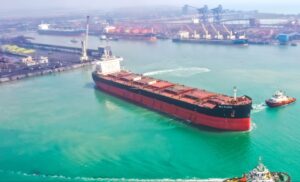
The Western Dock Project, with an investment of approximately ₹3,005 crore, is designed to add around 25 MTPA of capacity and facilitate the handling of Capesize vessels with drafts of up to 18.5 metres. By increasing vessel-handling capability and creating additional capacity, the project strengthens the physical foundation for the port’s next stage of maritime trade.
This is important because the Mega Port story cannot rest on a single throughput milestone. Sustaining relevance at larger scale requires marine infrastructure that can accommodate the vessel sizes, cargo flows and operating requirements of future trade.
2. A Logistics and Industrial Platform
The second proposition is that Paradip’s economic reach extends beyond the waterfront. A port of this scale creates value only when cargo can move efficiently between terminals, industrial centres and wider markets.
Paradip is supported by road corridors including NH-53 and SH-12, together with rail connectivity to important industrial and commercial centres. The 100-acre Multimodal Logistics Park developed with CONCOR adds an integrated facility for cargo movement and distribution. These connections strengthen the interface between maritime transport and inland supply chains.
The larger opportunity lies in the industrial activity that can develop around that connectivity. Warehousing, freight forwarding, cargo processing, packaging, equipment maintenance and other logistics services can expand around the port, while sectors such as steel, chemicals, petrochemicals and manufacturing can gain from proximity to a major maritime gateway.
The strategic shift is from cargo movement alone to value creation around cargo. Greater downstream processing and manufacturing can allow a larger share of economic value to be generated within the region rather than through the movement of raw materials alone. That is the basis of a broader port-led industrial ecosystem.
3. A Clean-Energy and Maritime-Manufacturing Cluster
The third proposition is diversification into sectors that could shape the next generation of maritime growth. Clean energy is one of the clearest examples.
Paradip has been identified as a Green Hydrogen Hub, with infrastructure planned to support green hydrogen, green ammonia and related commodities. The Centre has approved ₹797.17 crore for a dedicated jetty and allied facilities for handling green hydrogen, ammonia and other liquid cargo, with a proposed capacity of 4 MTPA.
The significance of this ecosystem goes beyond cargo handling. It can connect renewable-energy generation with production, storage, transport and export of clean-energy products, while creating demand for specialised infrastructure, engineering and technical services.
Maritime manufacturing provides a second dimension. A proposed 1.5-million-gross-tonne shipbuilding and ship-repair facility near Paradip can create opportunities across marine engineering, fabrication, machinery, electrical systems, design and specialised services. If developed at scale, such facilities can encourage ancillary industries and strengthen the maritime manufacturing base around the port.
Together, clean energy and maritime manufacturing broaden Paradip’s role from a trade gateway into a location where new maritime industries can potentially be built.
4. A Digitally Managed and More Sustainable Port Ecosystem
The fourth proposition is operating quality. Scale by itself is not enough; larger ports require better information systems, process integration, safety systems and environmental management.
Paradip is deploying digital systems across documentation, berth management, land management, procurement, payments and gate operations. Enterprise Business Solutions, electronic manifests and delivery orders, RFID, QR-based access, GIS, SCADA and AI-enabled yard management are supporting progressively more integrated processes. The Vessel Traffic Management and Information System (VTMIS) further supports vessel monitoring, navigation and maritime safety.
Environmental responsibility is also being incorporated into the development programme. The port has undertaken plantation and urban greening initiatives with a broader target of one million trees. At cargo-handling locations, measures including mist cannons, road-sweeping machines, wheel-wash systems and protective barriers support dust management. The transition towards cleaner operations also includes solar power, shore-to-ship power and progressive electrification of equipment.
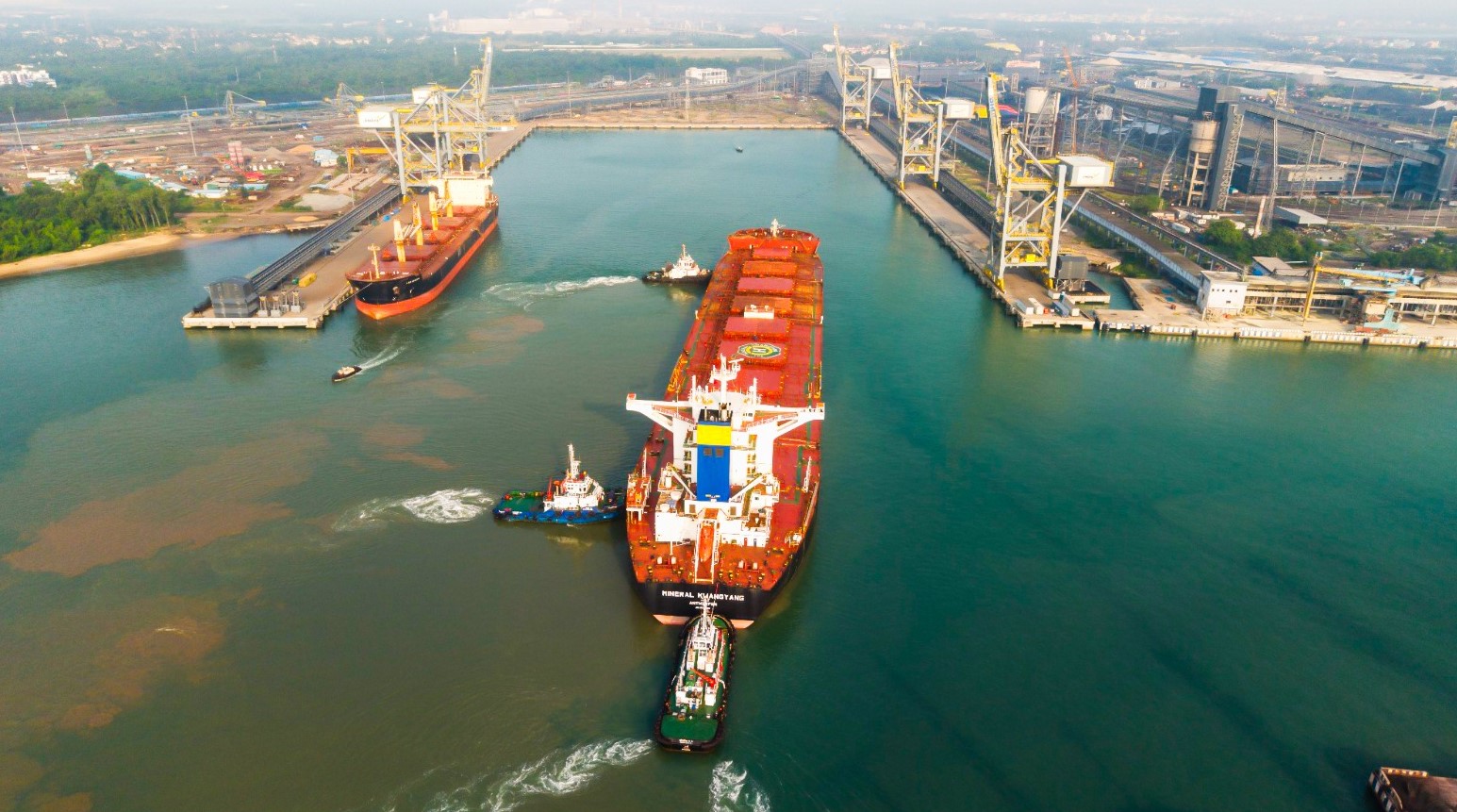 The objective is not to treat digitalisation and sustainability as separate programmes, but as operating capabilities required for a port that intends to handle greater scale with higher efficiency and stronger environmental discipline.
From Port Growth to Regional Economic Impact
Paradip’s development landscape now spans port infrastructure, logistics, clean energy, maritime manufacturing and downstream industries. Various assessments and project plans have indicated a potential investment pipeline of more than ₹50,000 crore associated with this wider development landscape. The eventual economic impact will depend on project execution, industrial capacity creation, private participation and the supporting infrastructure that connects these investments into a functioning ecosystem.
That distinction matters. Mega Port status does not, by itself, create investment or employment. It provides recognition of scale. The larger economic outcome will be determined by how effectively that scale is converted into infrastructure, industrial activity, logistics efficiency and new maritime capabilities.
Employment and skills will therefore remain central to the next phase. Growth in logistics, manufacturing, engineering, shipbuilding, clean energy, warehousing, technology and maritime services will require specialised capabilities.
Paradip Port Authority has undertaken skill-development initiatives through CEMS and CIPET to support industry-relevant training.
Community participation is part of the same development equation. During FY 2025–26, PPA spent ₹15.98 crore on CSR activities covering education, healthcare, skill development and community welfare. Employee and contractual-worker welfare measures have also been strengthened. The relevance of these programmes will increase as the economic ecosystem around the port becomes larger and more specialised.
The 2030 and 2047 Roadmap
Paradip’s development is being planned across two horizons. The 2030 roadmap focuses on expanding modern port infrastructure, strengthening logistics, improving digital operations and developing emerging energy facilities. The longer 2047 vision looks towards capacity exceeding 500 MTPA, supported by future maritime infrastructure and new economic activity.
The proposed Bahuda Satellite Port in Ganjam can further expand Odisha’s maritime network, while shipbuilding, ship repair and clean-energy industries can strengthen the state’s maritime industrial base. The direction is towards a system that is more diversified, technology-driven and integrated with the wider economy.
Beyond the Mega Port Milestone
Paradip’s Mega Port designation marks an important moment, but it is better understood as a point of transition than a point of arrival. The port has already demonstrated scale: cargo throughput has more than doubled over a decade to reach 156.45 MMT, supported by around 289 MTPA of rated capacity.
The next test is whether that scale can be translated into a larger economic system — one built on deeper maritime infrastructure, reliable logistics, industrial development, clean energy, maritime manufacturing, digital capability and a skilled workforce.
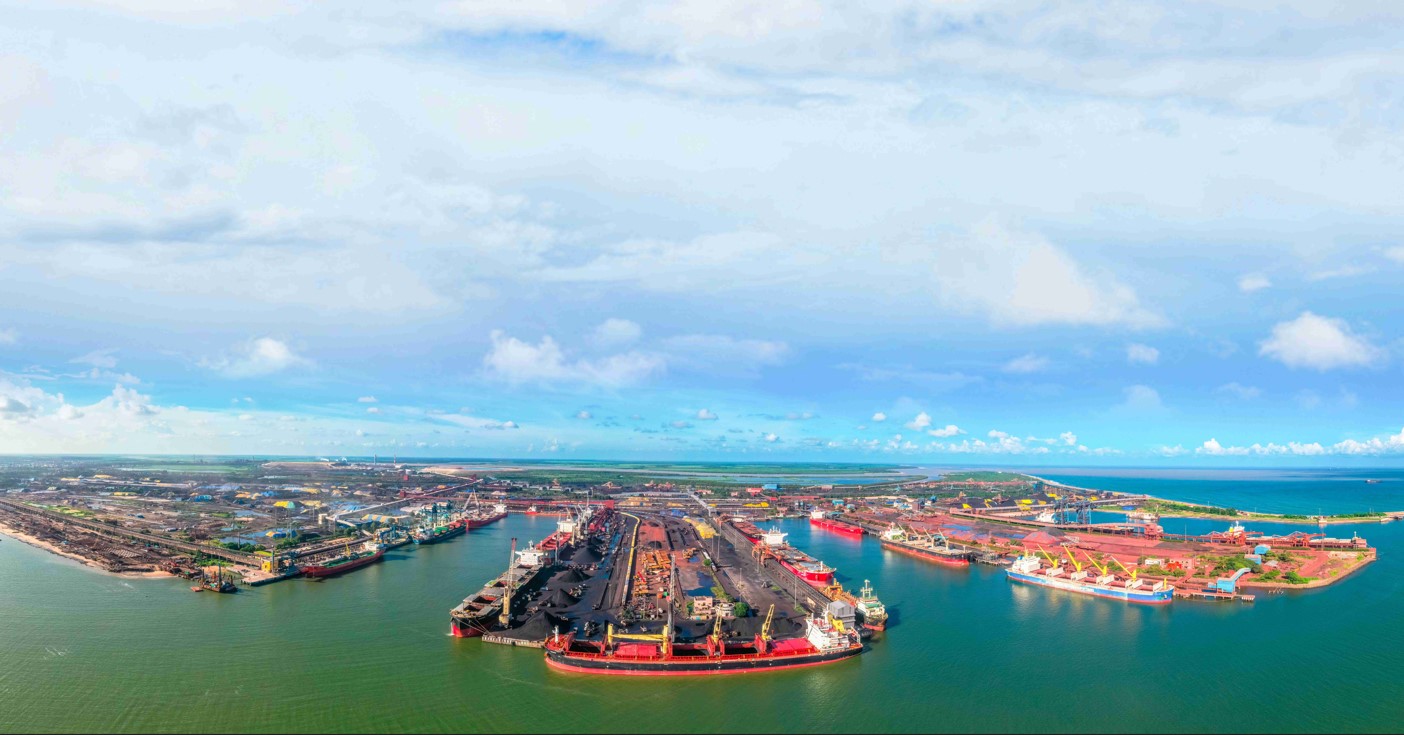 In that sense, Paradip’s long-term importance will ultimately be measured not only by the cargo moving through its terminals, but also by the industries connected to it, the investments enabled by it, the skills developed around it and the economic opportunities created across Odisha and the wider region.
Mega Port status is the recognition. The transformation will be defined by what Paradip builds around it.
About The Author