India’s Exporters Face Severe Space and Freight Pressure: When Will Normalcy Return?
By S.S. Jayamohan
 India’s exporters and logistics companies are going through one of the most difficult periods in recent years. Getting confirmed vessel space to the United States and Canada has become a major challenge, while freight rates have reached very high levels. Shipping lines such as Maersk, MSC and Hapag-Lloyd are facing strong demand, operational constraints and changing vessel schedules. As a result, exporters are finding it difficult to secure space at reasonable rates.
The impact is particularly severe on exporters of low-value and commodity cargo such as granite, minerals, cocopeat and animal feed. These products generally operate on tight profit margins. When ocean freight rises sharply, transportation can become a major part of the total cargo value.
In such cases, an exporter may have an order in hand but may still hesitate to ship because the freight cost can make the final product uncompetitive in the international market.
The current freight numbers show the seriousness of the situation. The LogisticsWall Indian Container Freight Index, or LW-ICFI, assessed the average Indian export market at US$5,804 for a 20-foot container and US$6,343 for a 40-foot/40HC container on 9 August 2026.
The 20-foot rate increased by 20.8% compared with the previous assessment. Interestingly, the index also indicated that space availability had improved somewhat, but freight levels remained high.
Market reports have also put some India-US ocean freight levels at around US$10,000 per container, depending on the trade lane and service. Such rates are creating serious pressure on exporters.
Shipping lines have also introduced additional surcharges. For example, Maersk announced a US$4,000 Peak Season Surcharge for applicable dry and reefer containers from the Indian Subcontinent and Middle East to the US and Canadian West Coast, effective from August 4, 2026. The company subsequently announced further changes to its surcharge levels. These charges are in addition to other applicable freight and local charges.
Empty containers: another major headache
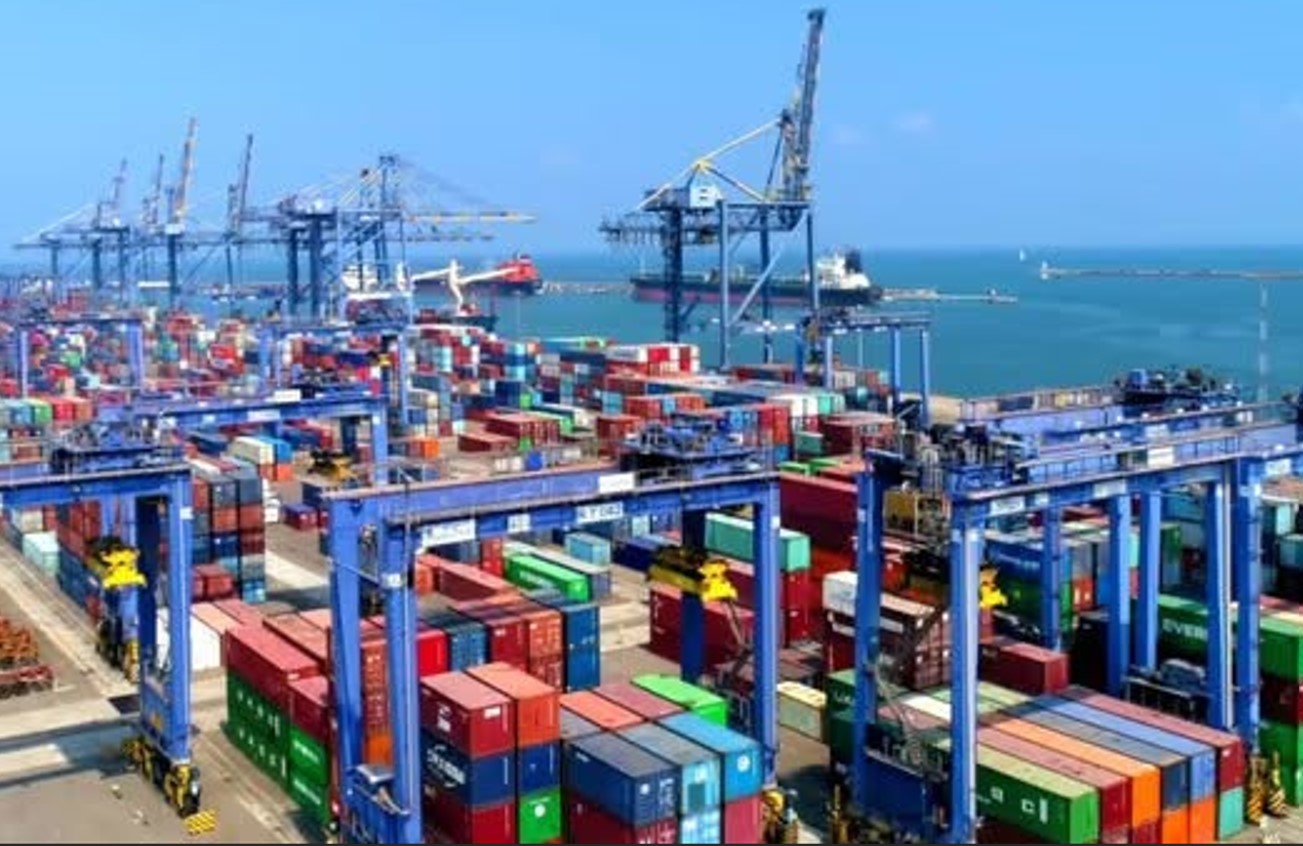
The problem is not limited to vessel space and freight rates. The shortage of empty containers has become another major headache for exporters and transporters.
In several locations, transporters are reportedly waiting for nearly two days, and sometimes longer, to collect empty containers from depots. A container may be available in the system, but physically getting it out of the depot can become a challenge.
This creates a chain reaction. If the empty container is delayed, stuffing is delayed. That can affect Customs clearance, documentation, factory planning and finally the vessel connection. Missing a vessel can mean waiting for the next sailing, with additional costs and uncertainty for both the exporter and the logistics provider.
China’s influence on global container movement
There is also an important industry discussion about the changing pattern of global container trade.
China continues to dominate global manufacturing and containerised exports. Large volumes of cargo move directly from Chinese ports to markets across the world. This creates strong demand for vessels and containers in the Far East.
For India, this has consequences on both exports and imports. Container flows are not always balanced between countries and trade routes. When containers move away from India and do not return quickly, Indian ports can face a shortage of empty equipment.
This is why the container shortage cannot be viewed only as a local problem. It is connected to the larger global movement of containers, vessel deployment, trade imbalances and changing shipping patterns.
Chennai exporters looking at alternatives
Another visible development is the search for alternative gateways. Some South Indian exporters are now considering moving their cargo to Mumbai and using Nhava Sheva/JNPA for shipments to the US, Canada and the Middle East. This involves additional inland transportation, but exporters are willing to consider it when they believe that better vessel connectivity, space availability or freight options can compensate for the extra inland cost.
This does not necessarily mean that Chennai is losing its importance. Rather, it shows how exporters are becoming more flexible and are looking for alternative solutions to keep their international business moving.
When will normalcy return? This is the biggest question in the industry.
There are some positive developments. Maersk and Hapag-Lloyd have announced the gradual restoration of some services through the Suez Canal after assessing the security situation in the Red Sea. A wider return to the Suez route could eventually reduce transit times and improve vessel utilisation.
However, it is too early to predict a definite date for a complete return to normal freight levels.
Freight rates depend on many factors — geopolitical conditions, fuel prices, vessel availability, port congestion, container availability, seasonal demand and the balance between cargo and shipping capacity. Even if one problem improves, another can continue to keep freight rates high.
For Indian exporters, particularly those handling low-value cargo, what is needed most is predictability. They need confirmed space, reasonable freight rates and regular availability of empty containers. Business planning becomes extremely difficult when freight rates change sharply within a short period or when containers are not available on time.
India has a strong manufacturing and export base. But competitive manufacturing alone is not enough. The cost and reliability of logistics are equally important. A product that is competitive at the factory gate can lose its advantage if international freight becomes too expensive or unpredictable.
The industry is therefore waiting for three things: stable freight rates, adequate container availability and reliable vessel space.
There is hope that improving geopolitical conditions and the gradual return of more normal shipping routes will bring some relief. But the recovery is likely to be gradual rather than immediate.
For exporters and logistics providers, the message is simple: they are ready for growth. What they need now is a stable and predictable shipping environment.
The question is no longer whether normalcy will return. The real question is: how soon?
About The Author