FIEO Urges Government to Restore Export Credit as ‘Strategic Priority’
New Delhi:
Port Wings News Network:
 The Federation of Indian Export Organisations (FIEO) has requested the Union Government to engage with the Reserve Bank of India and the banking sector to restore export credit as a strategic priority, ensure adequate and timely availability of export finance at internationally competitive interest rates and encourage banks to adopt a more facilitative approach towards exporters.
In a list of recommendations submitted by the FIEO during Board of Trade meeting, the agency stated that a “vibrant and responsive export credit ecosystem will be indispensable for achieving India’s ambitious target of becoming a USD 2 trillion export economy.”
FIEO’s Recommendations for the Board Of Trade meeting held at New Delhi on 3 July, 2026
1. Revitalising Priority Sector Export Credit to Sustain Export Growth
India’s exports have displayed remarkable resilience despite an increasingly uncertain global trading environment. However, this growth is not being matched by adequate institutional credit support.
Priority Sector Lending (PSL) for export credit has witnessed a significant decline, with export credit contracting by nearly 14% in the recent period. This has created serious liquidity constraints, particularly for MSME exporters who constitute the backbone of India’s export sector.
At a time when exporters are grappling with longer payment cycles, higher logistics costs, increased compliance requirements and heightened global competition, timely access to affordable working capital has become more critical than ever. Inadequate availability of pre-shipment and post-shipment credit directly impacts their ability to execute export orders, diversify into new markets and remain globally competitive.
We, therefore, request the Government to engage with the Reserve Bank of India and the banking sector to restore export credit as a strategic priority, ensure adequate and timely availability of export finance at internationally competitive interest rates and encourage banks to adopt a more facilitative approach towards exporters. A vibrant and responsive export credit ecosystem will be indispensable for achieving India’s ambitious target of becoming a USD 2 trillion export economy.
2. Addressing the Logistics Challenges Impacting India’s Export Competitiveness
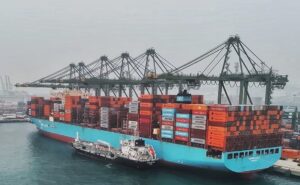
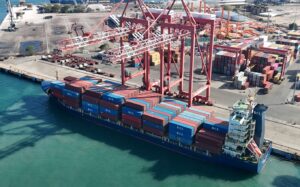
India’s export growth will increasingly depend on the availability of reliable, efficient and globally competitive logistics services. However, exporters continue to face significant challenges arising from high ocean freight rates, inadequate availability of containers and vessel space, and the levy of multiple non-transparent and arbitrary charges by shipping lines and their agents, including congestion, peak season, documentation, detention and demurrage charges. These factors are substantially increasing logistics costs, reducing the competitiveness of Indian exports and affecting the ability of exporters, particularly MSMEs, to meet delivery commitments in global markets.
We request the Government to accord high priority to this issue by engaging with the Ministry of Ports, Shipping & Waterways, the Directorate General of Shipping and other stakeholders to evolve a framework that ensures greater transparency and reasonableness in freight-related charges, improves container and vessel availability for Indian export cargo, and facilitates regular dialogue between exporters and shipping lines. An institutional mechanism for continuous monitoring of freight and logistics issues may also be considered to enable timely interventions during periods of market disruptions. Addressing these challenges will be critical to reducing logistics costs, strengthening India’s export competitiveness and supporting the country’s ambitious export growth targets.
3. Supporting Indian Exporters in the Global Green Transition
Global trade is undergoing a structural transformation as sustainability increasingly becomes a prerequisite for market access. Major trading partners, particularly the European Union through the Carbon Border Adjustment Mechanism (CBAM), are introducing stringent environmental compliance requirements that will significantly affect sectors such as steel, aluminium, cement and very soon chemicals, textiles and engineering products.
For Indian exporters, especially MSMEs, the challenge extends beyond compliance to the substantial financial burden associated with measuring, reporting and reducing carbon emissions across their production processes and supply chains. Without adequate institutional support, many exporters risk losing competitiveness in premium global markets and could face significant carbon-related border levies that would erode India’s traditional cost advantage.
We therefore request the Government to establish an Apex Green Transition Fund dedicated to supporting exporters in adopting cleaner technologies, improving energy efficiency and reducing carbon intensity.
This should be complemented by sector-specific Green Transition Helpdesks that provide technical guidance on carbon accounting, sustainability reporting, environmental certifications and compliance with emerging international regulations.
Financial assistance, concessional finance and competitive technology transfer, along with support for carbon audits and traceability systems, will enable Indian exporters to successfully navigate the evolving global trade architecture. Investing in the green transition today is essential not only to safeguard existing export markets but also to position India as a preferred sourcing destination in increasingly sustainability-conscious global value chains.
4. Operationalising GST Refunds for Foreign Tourists to Promote Tourism and Retail Exports
Section 15 of the Integrated Goods and Services Tax (IGST) Act, 2017 provides for a GST refund mechanism for foreign tourists purchasing goods in India. However, despite nearly nine years having elapsed since the introduction of GST, this important provision remains unimplemented.
Around the world, VAT/GST refund schemes have become an integral component of tourism promotion strategies and have significantly boosted retail exports by encouraging international visitors to purchase locally manufactured products. Countries such as Singapore, Japan, Thailand, China, the United Arab Emirates and members of the European Union have successfully leveraged such schemes to enhance tourist spending and strengthen domestic manufacturing. Indian manufacturers and retailers, particularly in sectors such as gems and jewellery, textiles, carpets, handicrafts, leather products, handlooms and other lifestyle goods, compete directly with businesses in these countries.
The continued absence of a GST refund mechanism places them at a clear competitive disadvantage in attracting the rapidly expanding global shopper market. This is reflected in the fact that shopping accounts for only about 20% of total tourist expenditure in India, compared to nearly 46% in Japan, around 40% across the European Union and approximately 36% in Singapore. Operationalising the GST refund scheme through a simple, technology-enabled mechanism at major international airports would significantly enhance India’s attractiveness as a global shopping destination, increase sales of Indian-made products, generate higher foreign exchange earnings, create employment across manufacturing, handicrafts and retail sectors, and effectively promote “exports without logistics costs.”
We therefore urge the Government to operationalise the GST Refund for Tourists Scheme at the earliest as an important measure to integrate tourism with India’s export promotion strategy and strengthen the country’s position as a global destination for high-quality lifestyle and heritage products.
About The Author