Chinese Companies Prioritise Supply Chain Resilience, AI and New Markets For Growth: DP World Survey
Chennai:
Port Wings News Network:
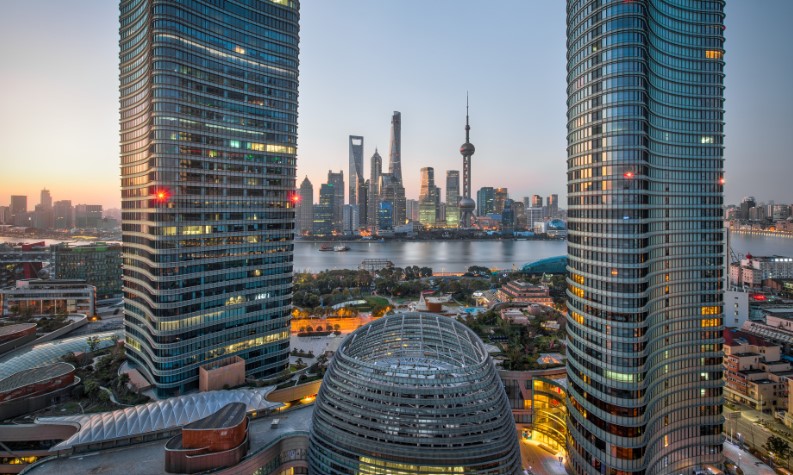 Despite recent disruption and uncertainty across global trade, Chinese companies are focused on long-term growth strategies centred on supply chain resilience, AI adoption and access to new markets, according to DP World’s Global Trade Observatory.
The international survey, which included 292 supply chain and logistics executives in China, shows companies looking beyond cost and scale alone as they adapt to a changing trade environment, with a clear focus on sourcing diversification, digital capability, new markets and practical trade facilitation.
When asked about strategic changes planned for 2026, the most popular option was increasing suppliers to diversify sourcing (58%), followed by near-shoring operations (38%), friend-shoring operations (36%), and increasing inventories (32%).
Businesses in China are using logistics networks to build a more layered approach to resilience: more suppliers, more route options, more regional flexibility and more ability to shift as rules, costs and demand change.
However, the drivers behind the strategic changes were not purely defensive. Across the strategic changes identified by Chinese supply-chain executives, the strongest drivers included sustainability and ESG requirements, new technology enabling operational change, greater agility and resilience, local market trade policies and incentives, response to tariffs, and new market entry.
Glen Hilton, CEO and Managing Director, Asia Pacific, DP World, said: “China’s next trade advantage will come from resilience and adaptability, not just scale. Chinese companies are already diversifying suppliers, entering new corridors and investing in digital systems and AI. But that ambition creates most value when companies can see their cargo, switch between routes, clear borders, manage documentation and fulfil reliably across markets. What customers increasingly need is not a disconnected set of providers. They need an operating partner that can connect the physical and digital layers of trade – ports, terminals, freight forwarding, customs, warehousing, systems and last-mile execution. DP World is built to help make that complexity work at an international level, so businesses can keep moving even as routes, rules and demand change.”
Technology emerged as the leading growth priority. When asked about the top drivers of growth for their business over the coming one to three years, 50% of respondents identified deploying AI, 44% cited wider digitalisation, 43% cited growing demand from new markets and consumers, and 34% cited new value chains.
This emphasis on AI and digitalisation also aligns closely with the direction set out at China’s “Two Sessions”, where New Quality Productive Forces, including AI and advanced technologies, were positioned as central to the country’s next phase of economic development.
DP World, which provides end-to-end supply chain solutions and handles around 10% of global containerised trade, has seen these themes reflected in its work supporting customers in China across sectors including e-commerce, automotive, fashion and luxury, food and beverage, healthcare and technology.
Its capability in China combines global network reach with local operating expertise across freight forwarding, contract logistics, warehousing, customs and documentation support, ports and terminals, and technology-enabled supply-chain visibility. This is designed to help customers reduce hand-offs, improve control, and execute more reliably across borders.
About The Author