Fumigation Service Providers Undergo Four-Day Training to Strengthen Phytosanitary Compliance
Chennai:
Port Wings News Network:
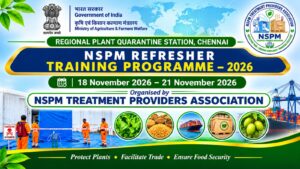
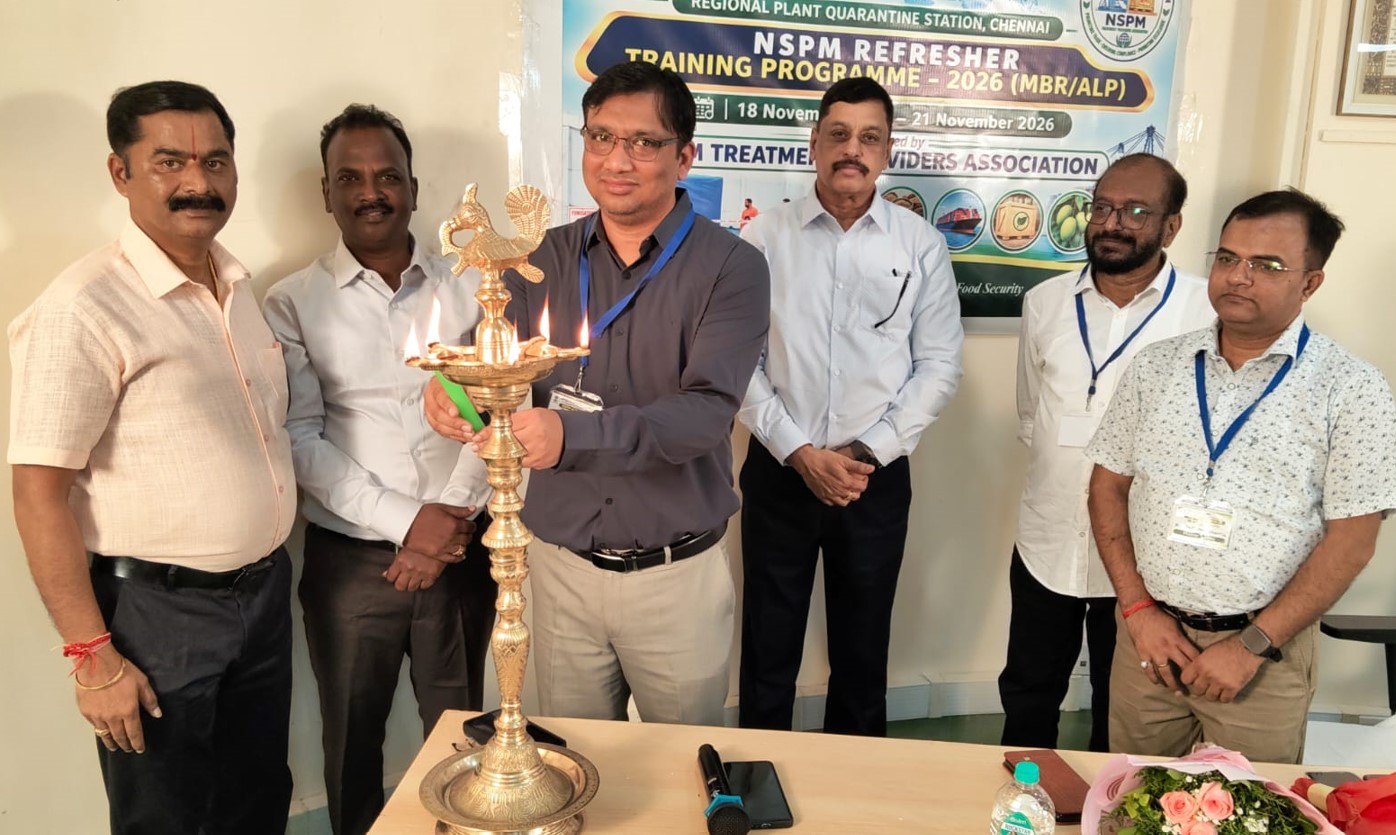 A four-day training programme for fumigation service providers commenced on 18 November and will conclude on 21 November. The programme is being organised by the NSPM Treatment Providers Association under the guidance of the Department of Plant Protection, Quarantine and Storage (DPPQS).
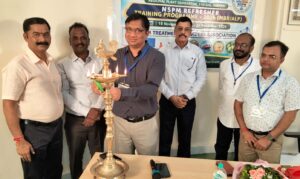
The training programme was inaugurated by Dr. Mir Samim Akthar, Joint Director, Regional Plant Quarantine Station, Chennai.
The training is aimed at imparting in-depth technical knowledge and practical expertise to professionals involved in fumigation of agricultural commodities meant for international trade, covering both imports and exports.
C. Johnson, President of NSPM Treatment Providers Association while explaining the objectives, significance and benefits of the training programme, emphasized the need to strengthen technical competency, ensure regulatory compliance and maintain the credibility of India’s phytosanitary certification system in international markets.
FUMIGATION AGENCIES URGED TO STRENGTHEN TECHNICAL STANDARDS AND SAFETY MEASURES
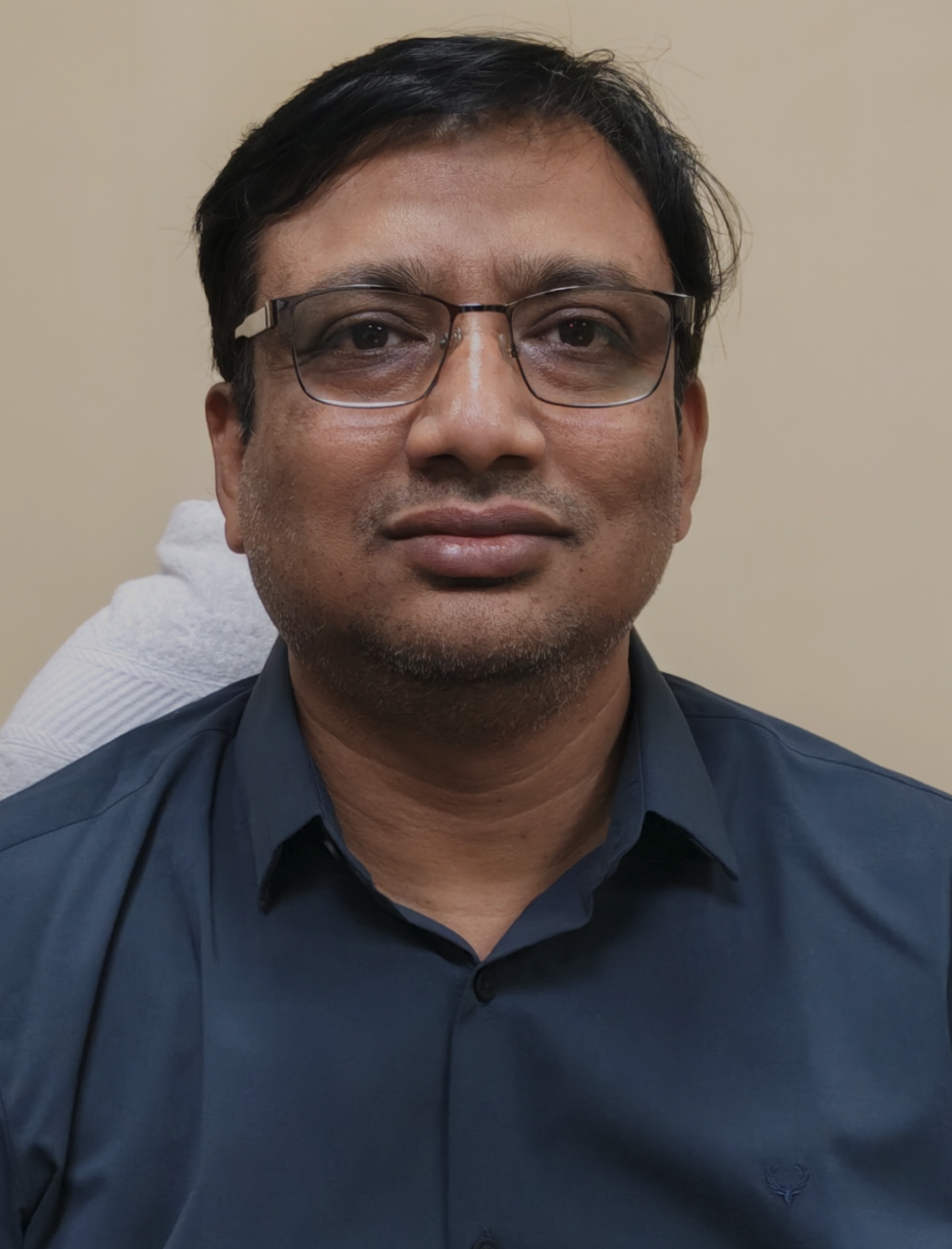 Addressing the gathering after inaugurating the training session, Dr. Mir Samim Akthar said, “This training programme organised by the NSPM Treatment Providers Association in Chennai through a virtual platform, the official emphasised the importance of capacity building and continuous improvement in fumigation operations.”
The official appreciated the initiative taken by the association for organising the training programme after a considerable gap. He also acknowledged the contributions of master trainers who would share their technical knowledge and practical experience with the participants.
Highlighting the importance of the training, he said that recent inspection and surprise audits conducted by the Directorate of Plant Protection, Quarantine and Storage (DPPQS) under NSPM 12 and 22 had revealed several serious non-conformities. Consequently, a number of fumigation agencies had faced suspension and regulatory action.
He further pointed out that pest interceptions and other instances of non-compliance reported by importing countries had adversely affected the reputation of India’s phytosanitary certification system. Every such interception abroad affects not only an individual exporter or fumigation agency but also the confidence of international trading partners in the country’s entire certification system.
The recent audits had identified recurring deficiencies, including issues relating to procurement and traceability of fumigants, maintenance and use of respirators and other safety equipment, availability and upkeep of essential fumigation equipment, calibration and operation of gas monitoring instruments, documentation and record management, and inadequate internal supervision.
He urged all accredited agencies to review these observations and take immediate corrective measures, stressing that compliance should become an integral part of organisational culture rather than a requirement observed only during inspections.
Referring to a recent phosphine poisoning incident involving the vessel MV Wu Zhou, in which 13 crew members reportedly died, he underlined the importance of strict adherence to approved fumigation procedures, proper supervision, accurate documentation and professional accountability.
He stated that NSPM 12 and NSPM 22 were not merely regulatory requirements but essential standards designed to ensure the integrity, reliability, safety and international acceptance of India’s phytosanitary system.
The official also requested the organisers and master trainers to make the sessions interactive and practical by discussing real-life case studies, audit observations, common non-conformities and lessons learnt from recent pest interceptions.
He suggested conducting an assessment or examination at the conclusion of the programme to evaluate participants’ understanding of the standards. Feedback from participants should also be collected and analysed to improve future training programmes.
Concluding his address, he called upon all fumigation agencies to work together to strengthen regulatory compliance, improve professionalism and uphold the credibility of India’s plant quarantine and fumigation system.
FUMIGATION IS AN IMPORTANT PHYTOSANITARY TREATMENT
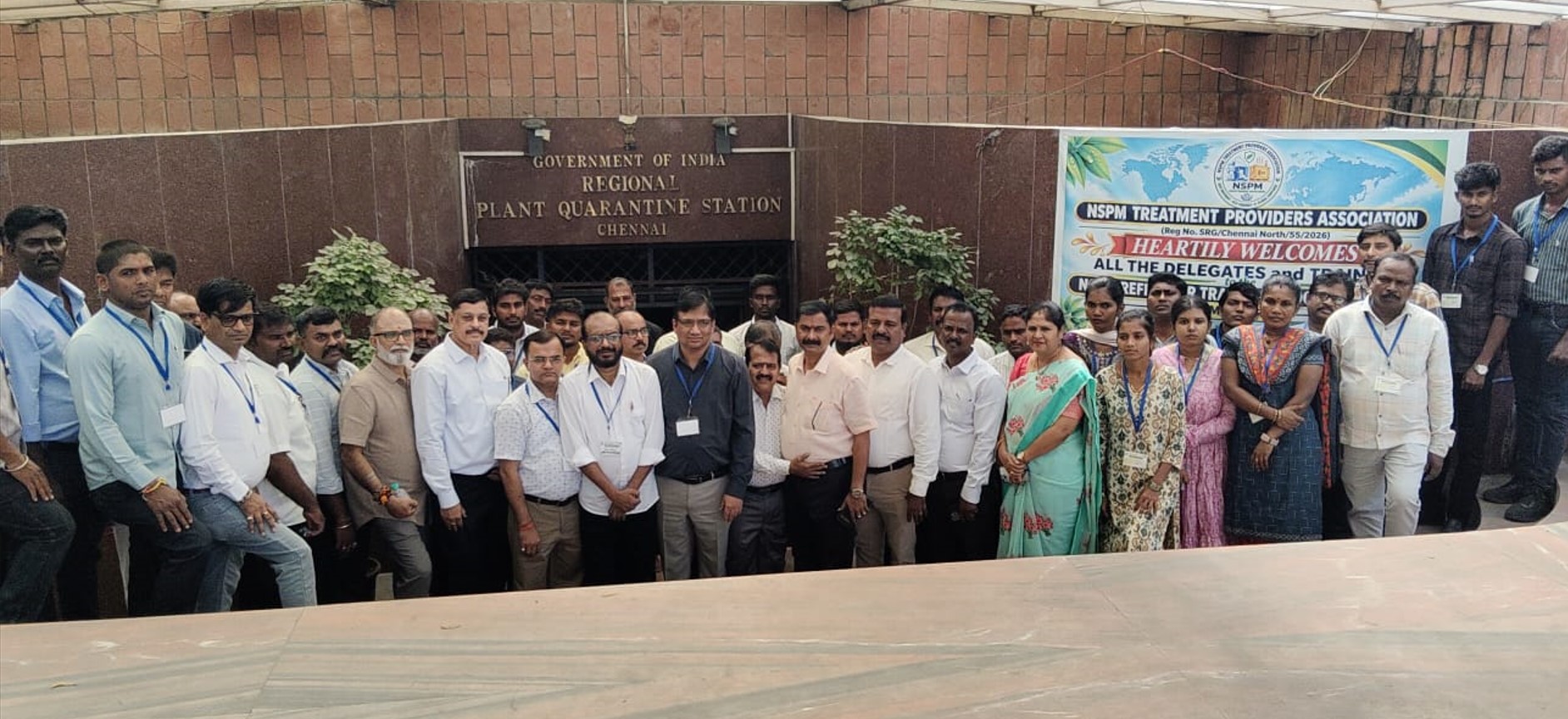 Fumigation is an important phytosanitary treatment to eliminate regulated pests and prevent their spread across international borders. It plays a crucial role in ensuring quarantine compliance and facilitating the smooth movement of agricultural commodities in global trade.
In recent times, Australian quarantine authorities have raised concerns over the performance and compliance of certain Indian fumigation service providers. An increase in phytosanitary non-compliances and pest interceptions has also been reported in various international markets, including the European Union, raising concerns over the reputation and acceptance of Indian agricultural consignments in overseas markets.
Recognising the seriousness of the situation, the NSPM Treatment Providers Association has taken the initiative to organise the comprehensive capacity-building programme to strengthen the technical competency of the fumigation industry and improve compliance with national and international phytosanitary requirements.
The four-day programme will cover approved fumigation procedures, treatment schedules, fumigant dosage, exposure periods, gas concentration monitoring, sealing, aeration, documentation and importing-country quarantine requirements.
The inaugural session was guided by Dr. C. S. Patni, Scheme In-charge, DPPQS, Faridabad, and chaired by Dr. Mir Samim Akthar, Joint Director, RPQS, Chennai.
Association Secretary K. Radhakrishnan, Vice-President C. Vincent, Joint Secretary J. Karikalan and other office-bearers participated in the inaugural programme and coordinated the arrangements.
About The Author