Chennai Customs Brokers Threaten Boycott of MSC Exports from 15 Nov over ‘Unjustified’ LO/LO Charges
Chennai:
Port Wings News Network:
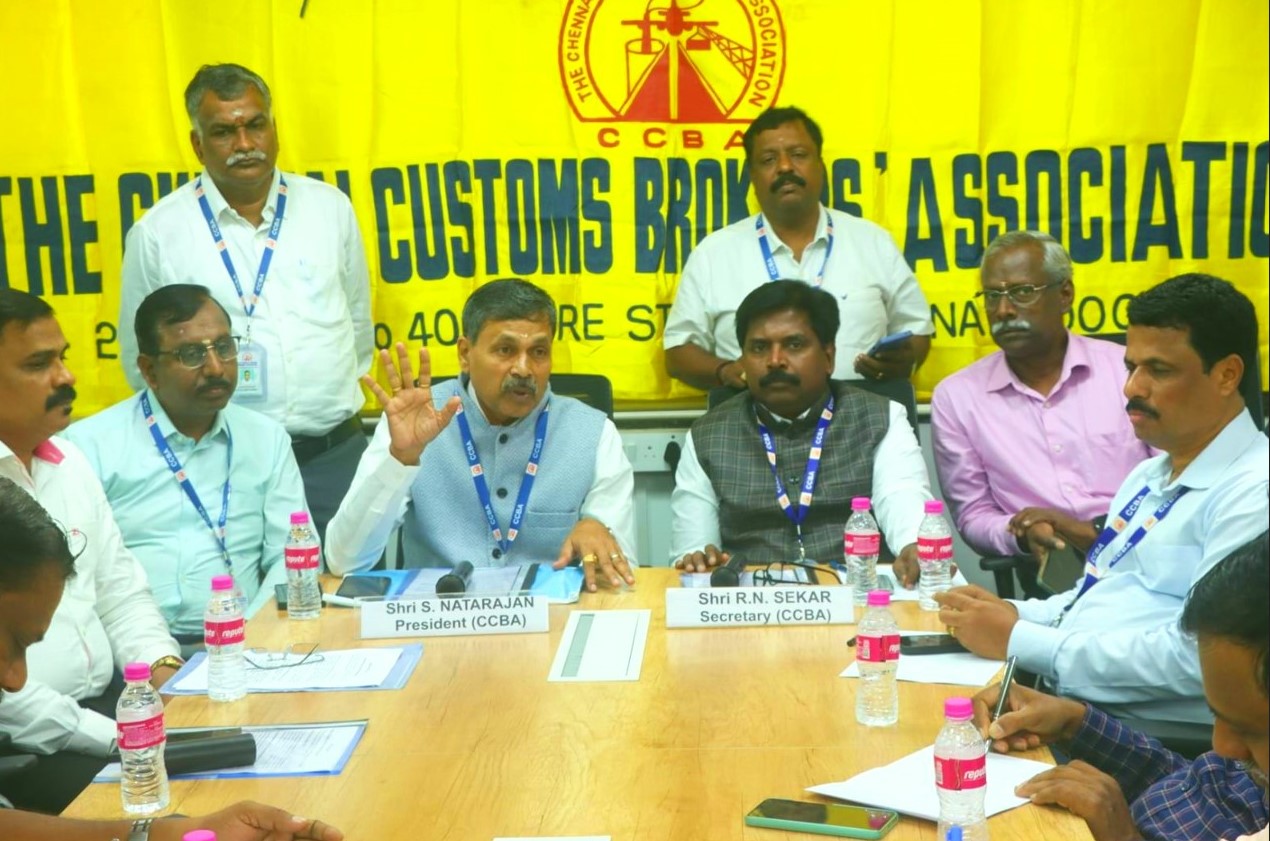 In a major escalation of the dispute over additional logistics charges, the Chennai Customs Brokers Association (CCBA) has unanimously decided to boycott export shipments handled by Mediterranean Shipping Company (MSC) from 15 November if the shipping line fails to withdraw its practice of collecting Lift-On/Lift-Off (LO/LO) charges through nominated third-party empty container yards.
The association has also warned that the boycott will be extended to MSC’s import consignments from 15 December if the issue remains unresolved. The decision was taken at an Extraordinary General Body Meeting held on 29 October 2026, following what the association described as five years of sustained opposition to the collection mechanism.
The association said the decision would also apply to other shipping lines (Maersk, Hapag Llyod, CMA CGM and others) adopting similar practices and warned that appropriate action would be taken against them if they failed to discontinue the system.
THIRD-PARTY COLLECTION UNDER SCANNER
At the centre of the dispute is the collection of additional charges for unloading empty import containers at designated yards and lifting empty containers for export shipments.
According to CCBA, shipping lines have started routing these payments through privately operated, nominated empty container yards instead of including them in their official invoices.
The association has raised concerns over the absence of a transparent regulatory mechanism governing the fixation and collection of these charges.
“Chennai Port handles roughly 3 lakh containers every month. And MSC’s share stands and 25,000 boxes. Our objection is not to genuine and legitimate commercial charges. We have consistently maintained that any lawful charges payable to shipping lines must be collected directly by them through their official invoices, rather than through nominated third-party yards,” S. Natarajan, President, CCBA, said.
It pointed out that importers and exporters frequently refuse to reimburse such additional payments when Customs Brokers submit their final bills, leaving brokers to absorb the disputed costs.
FIVE-YEAR BATTLE, THREE CUSTOMS INTERVENTIONS
CCBA said it had opposed the introduction of this practice in Chennai for the past five years, with the support and intervention of Chennai Customs authorities.
The association claimed that the Chief Commissioner and Commissioner of Customs (Preventive), Chennai, had issued directions on three occasions against collections through unregulated third-party entities. However, the shipping lines concerned had not adequately addressed the objections.
Shipping lines have reportedly questioned why Chennai should be treated differently when similar practices exist at other ports.
Rejecting this argument, CCBA maintained that the existence of an undesirable practice elsewhere cannot justify its introduction in Chennai.
The association has also flagged concerns over possible commercial arrangements involving operators from other ports influencing the extension of this collection mechanism to Chennai, and called for examination by the competent authorities.
BROKERS CAUGHT BETWEEN SHIPPING LINES AND CUSTOMERS
Highlighting the financial pressure on Customs Brokers, the association said its members play a crucial role in facilitating international trade, acting as a link between importers, exporters, Customs authorities, ports and shipping lines.
Despite being licensed professionals under the Customs Act, brokers face rising operational expenses, multiple logistics charges and prolonged delays in recovering payments.
“In Chennai, Customs Brokers routinely extend credit to clients for nearly two months or more after clearance of consignments. Even after that, there is no assurance that the entire amount incurred and invoiced will be reimbursed,” R.N. Sekar, Secretary, CCBA, said.
The association warned that absorbing disputed and additional charges was affecting the working capital and long-term sustainability of Customs Brokers.
OTHER PORTS OFFER A WARNING
The association cited the experience at other major ports, where charges that reportedly started at around Rs 1,000 have increased to Rs 7,500-Rs 8,000 over approximately five years for basic empty container handling operations.
While the charges in Chennai currently range between Rs 800 and Rs 1,000, CCBA fears that allowing the practice to continue could result in substantial increases in the coming years.
“Once such a collection mechanism is allowed to become established, there is no effective assurance against repeated increases. Privately operated third-party yards cannot be permitted to impose an open-ended financial burden on the EXIM trade without adequate transparency and accountability,” S. Natarajan said.
MSC’S LEAD ROLE QUESTIONED
MSC has taken the lead in implementing the collection practice in Chennai, following which other shipping lines have also initiated similar measures, CCBA said.
The association argued that Chennai’s EXIM trade has distinct commercial and operational characteristics and that additional charges would undermine its competitiveness.
It also said the practice ran contrary to the Union Government’s efforts to improve ease of doing business, enhance logistics efficiency and reduce transaction costs for importers and exporters.
Call for immediate withdrawal
CCBA has urged shipping lines to reconsider their position and immediately withdraw the third-party collection mechanism.
“Our demand is simple: shipping lines should collect all lawful and legitimate charges transparently through their own invoices. The burden of collection should not be transferred to private vendors and ultimately pushed on to Customs Brokers,” S. Natarajan said.
We remained open to constructive engagement with shipping lines, Customs authorities and other trade stakeholders to resolve the dispute amicably, he added.
The association maintained that its unanimous decision was aimed at protecting the Customs Brokers fraternity and Chennai’s wider EXIM trade from avoidable financial burdens, while ensuring transparency and accountability in logistics operations.
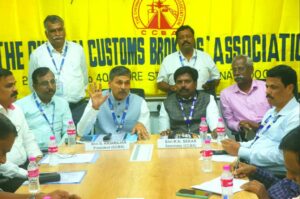
During the media briefing, CCBA officials, including P. Divakar, C.V. Karunakaran, S. Balaji, R. Kumar and others, were present.
About The Author